
The Liquid Hearth - Coffee as Medicine in the Little Ice Age
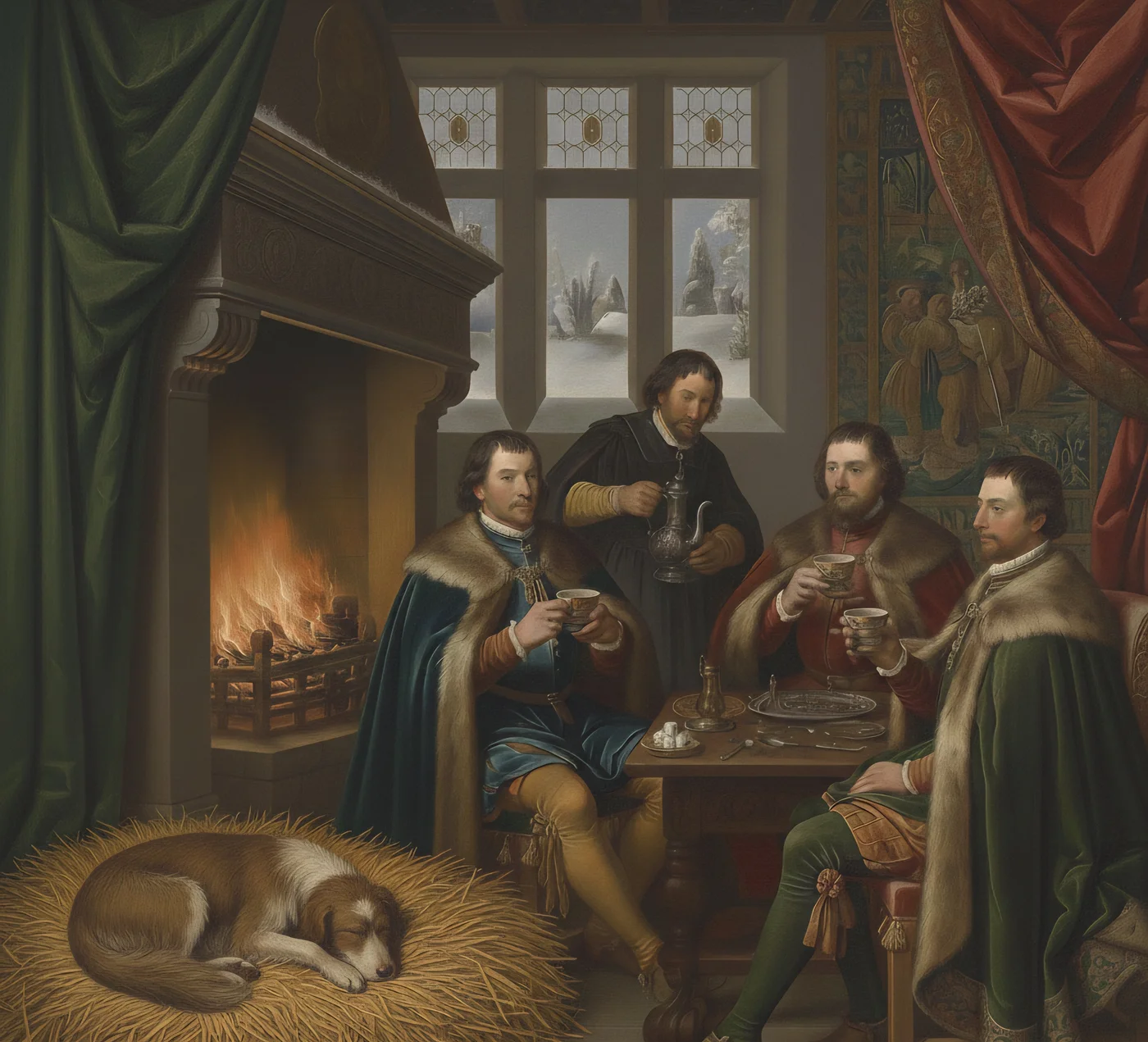
The history of coffee is often told as a story of social revolution or modern convenience. In reality, coffee’s arrival in the West was a practical solution to an environmental crisis. During the seventeenth century, as Europe grappled with the bitter winters of the “Little Ice Age,” coffee emerged as a transformative medical tool—a “liquid hearth” designed to protect human health against a brutal and damp climate.
The Science of the Four Humors
To understand why coffee became a winter staple, one must look to the prevailing medical wisdom of the era: Humoral Theory. Based on the ancient teachings of Galen, health was viewed as a delicate equilibrium between four bodily fluids, or humors: blood, yellow bile, black bile, and phlegm. Each humor possessed specific qualities—heat, cold, moisture, or dryness.
In this framework, winter was the season of the “Phlegmatic.” Characterized as cold and moist, an excess of phlegm was blamed for the era’s most persistent winter afflictions, from heavy chest colds and congestion to the crushing lethargy often brought on by the season’s short, dark days. To restore balance to a body suppressed by the damp, a person required a “Hot and Dry” countermeasure.
Coffee as a “Great Desiccator”
When coffee first arrived in European ports from the Ottoman Empire, it sparked a fierce medical debate. While the drink was served piping hot, many physicians—adhering to the complexity of Humoral Theory—debated whether the bean itself was “hot” or “cold.” However, they universally agreed on one vital trait: Coffee was a potent “Dryer.”
Prominent figures of the time, including the entrepreneur Pasqua Rosée… marketed the drink as a potent weapon against the damp climate. In his famous handbill, The Vertue of the Coffee Drink, Rosée explicitly argued that coffee was a “Dryer” that could prevent “dropsy,” “scurvy,” and “gout”—all conditions aggravated by the wet winter. For the seventeenth-century Londoner shivering in a drafty timber-framed home, drinking this dark, boiling brew was a calculated act of internal climate control. It was believed to literally dry out the dampness of winter, clearing the lungs and absorbing the harmful fluids that thrived in the frost.
A Catalyst for “Sober Warmth”
Before the coffeehouse became a fixture of the European landscape, the primary source of warmth and hydration was fermented malt. While warmed ale provided a temporary flush of heat, its intoxicating effects often hindered productivity. Coffee represented a significant breakthrough for the human mind.
It offered what historians call “sober warmth”—a metabolic heat that stimulated the central nervous system without the clouding effects of alcohol. This allowed merchants, scholars, and laborers to maintain focus through the dim winter months. Furthermore, coffee was praised for its ability to clear “vapors” from the brain, providing a rudimentary but effective treatment for “The Spleen”—a term used to describe the melancholy we now recognize as Seasonal Affective Disorder (SAD).
From Medical Utility to Cultural Tradition
The medicinal role of coffee in the 1600s eventually evolved into a cornerstone of social comfort. The coffeehouses of the Little Ice Age functioned as communal warming stations, where the heat of the hearth and the heat of intellectual debate combined to ward off the winter chill.
While we no longer rely on ancient humoral medicine to explain our morning ritual, the underlying principle remains unchanged. We still turn to coffee to ignite our internal “digestive fire” and to sharpen our senses against the lethargy of a cold morning. It remains a testament to human resourcefulness—a way to manufacture our own light and warmth when the natural world offers very little of either.
Carrying the Heritage Forward
At Mauch Chunk Coffee Company, we find a profound connection between the warming remedies of the past and our modern commitment to quality and community. The pioneers of the seventeenth century saw coffee as a way to overcome the challenges of their environment, recognizing that resourcefulness was the key to thriving in a harsh climate.
Today, as the frost settles over Jim Thorpe and the Lehigh Gorge, we invite you to participate in this enduring legacy. Whether you are seeking a shield against the winter dampness or a moment of clarity, there is a rich history of ingenuity in every cup. We remain dedicated to upholding these ideals of resilience and warmth, honoring the early pioneers who first recognized that a simple bean could power a person through the coldest of seasons.The history of coffee is often told as a story of social revolution or modern convenience. In reality, coffee’s arrival in the West was a practical solution to an environmental crisis. During the seventeenth century, as Europe grappled with the bitter winters of the “Little Ice Age,” coffee emerged as a transformative medical tool—a “liquid hearth” designed to protect human health against a brutal and damp climate.