
The Role of Elevation in Coffee Production
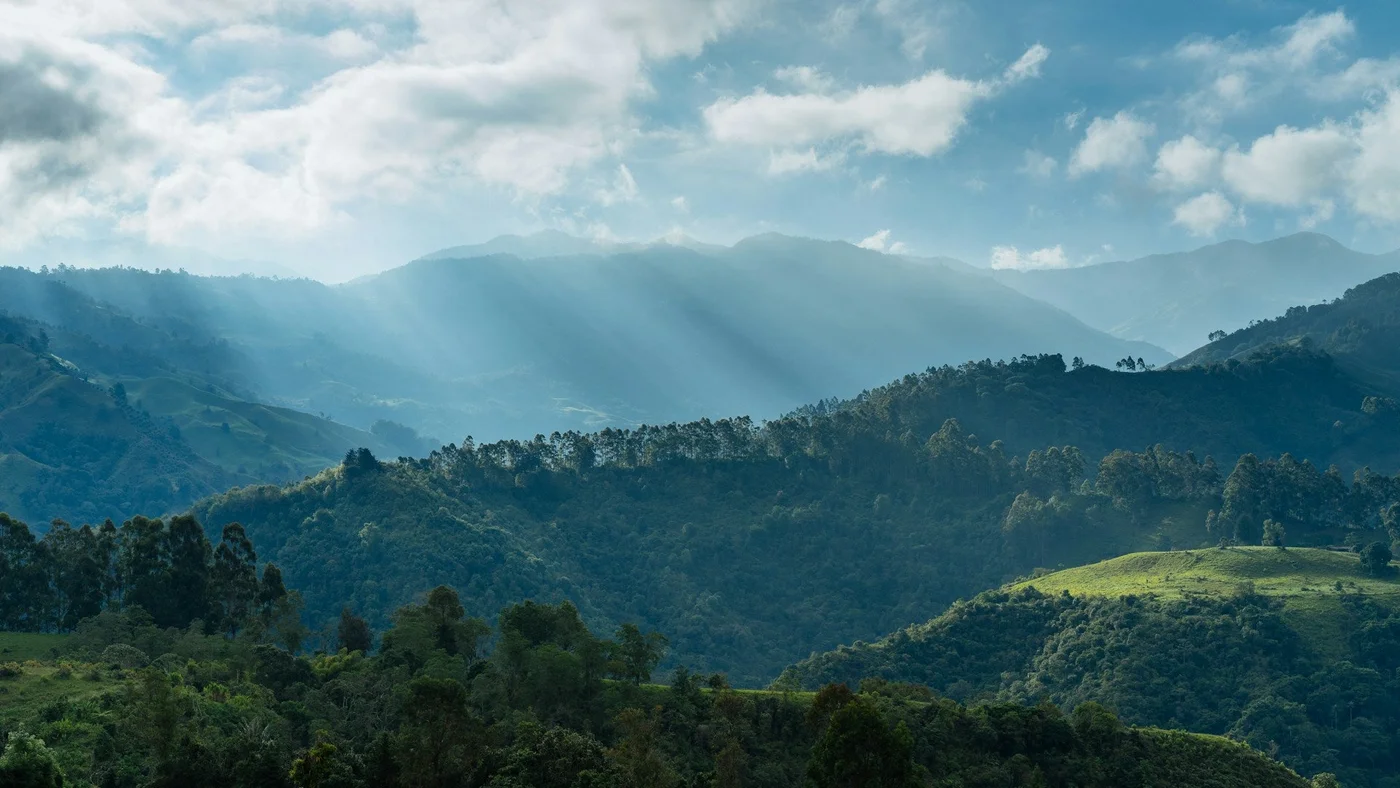
Elevation in coffee refers to the altitude at which coffee trees are grown above sea level. In coffee cultivation, altitude is significant primarily because it serves as a proxy for temperature and local microclimate—influencing ambient warmth, daily temperature fluctuations, and rainfall patterns.
At higher altitudes within a given region (often spanning between 800 and 2,200 meters above sea level depending on latitude), cooler average temperatures can allow the fruit to mature more slowly and accumulate sugars and other flavor precursors. This extended development window often yields beans associated with vibrant acidity, floral or fruit-forward aromatics, and distinct taste profiles highly prized in specialty coffee.
However, elevation does not act alone or serve as an independent quality grade. What is considered “high elevation” near the equator in Colombia or East Africa might differ significantly from growing conditions at similar altitudes in sub-tropical regions like Hawaii or southern Brazil. Factors such as latitude, shade canopy, soil composition, slope orientation, plant variety, and post-harvest processing interact to shape the final cup.
Conversely, coffee grown at lower relative altitudes generally experiences warmer ambient temperatures, resulting in faster cherry maturation. While this often yields coffees with lower acidity and fuller body—frequently featuring classic notes of chocolate, nuts, and caramel—the resulting profile is shaped by the total growing environment rather than altitude in isolation.
While elevation statistics on a coffee label provide helpful context about growing conditions, elevation is best understood as one essential element of terroir—working alongside climate, soil, and human craftsmanship to define the distinct character of every harvest.