
Why Beekeepers Love Old Burlap Coffee Sacks
Long before coffee reaches your cup, it has already been on quite a journey.
Green coffee travels from farms and mills across the globe before arriving at roasteries like ours here at Mauch Chunk Coffee Company. Traditionally, much of that coffee makes the transoceanic trip packed in sturdy burlap—or, more accurately, jute—sacks.
Once the green beans are emptied into our roaster hoppers, those sacks have completed their primary mission. But that doesn’t mean their usefulness has to end there.
One of our favorite examples of giving burlap a second life comes from a somewhat unexpected neighbor in sustainable agriculture: beekeeping.
Why Do Beekeepers Use Burlap?
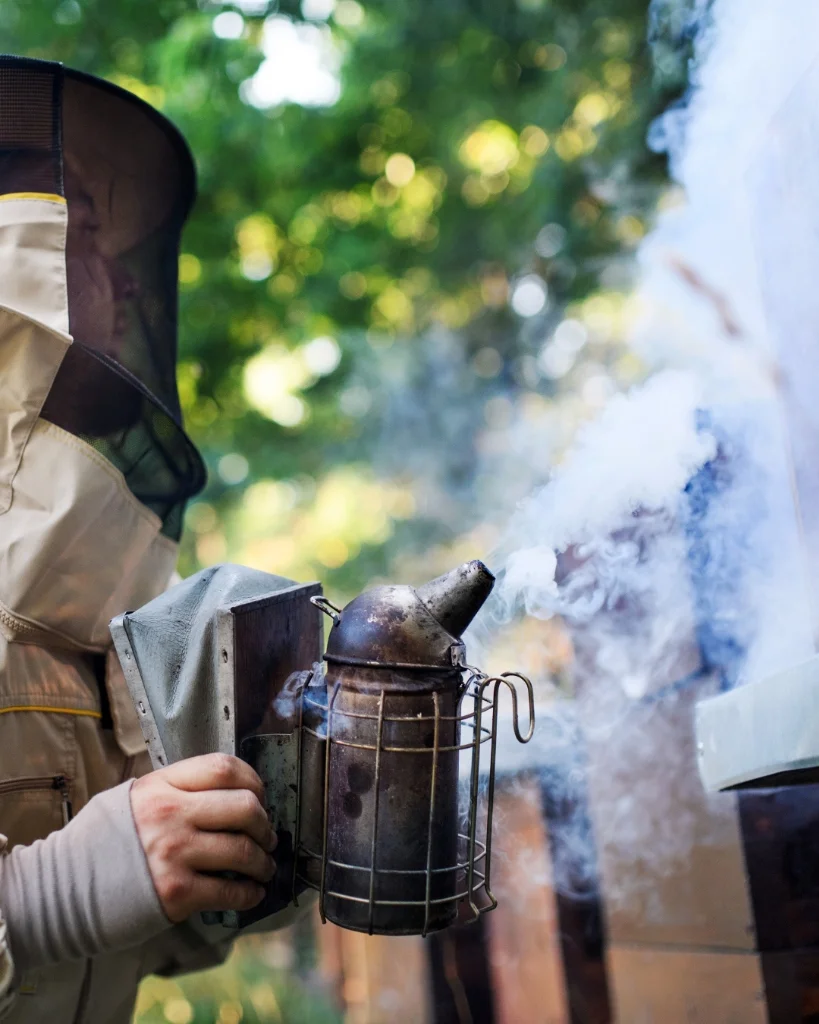
Anyone who has watched a beekeeper work an apiary has likely seen the trade’s most recognizable tool: the bee smoker.
A bee smoker produces cool, dense smoke that helps make a colony easier and safer to work with during hive inspections. Smoke interferes with the bees’ alarm communication—specifically masking alarm pheromones like isopentyl acetate—and generally reduces defensive behavior, allowing a beekeeper to inspect frames and care for the colony with far less disruption.
Of course, the smoker needs reliable fuel.
Beekeepers use a number of natural materials, including pine needles, untreated wood shavings, dry grass, cardboard, and burlap. The UGA Honey Bee Program outlines how slow-smoldering fuels create the steady, manageable smoke needed in a canister, while regional field guides from the Mid-Atlantic Apiculture Research and Extension Consortium (MAAREC) specifically highlight natural fibers and rolled burlap for producing cool, thick smoke that protects both bees and beekeepers.
Burlap has several practical qualities that make it particularly useful in the apiary:
- Easy to Manage: It can be cut or torn into manageable strips that roll neatly into smoker canisters.
- Convenient Storage: Sacks store flat, stay dry, and keep on hand without creating loose debris.
- Controlled, Steady Burn: The open weave allows consistent smoldering rather than disappearing immediately in a flash of flame, providing a dependable source of smoke while a beekeeper works.
For a material that began its lifecycle carrying coffee thousands of miles across oceans, that is a remarkably impressive second act.
Coffee, Burlap, and a More Circular Way of Thinking
This intersection between coffee roasting and beekeeping also connects back to something we think about often in our craft: materials, footprint, and waste.
Coffee roasting inevitably involves materials beyond the roasted beans themselves. Green coffee must be transported across continents and oceans, and historically, natural-fiber jute sacks have been a foundational part of that global journey.
Jute possesses notable environmental advantages. As a rain-fed plant fiber, the United Nations Food and Agriculture Organization (FAO) notes that jute products are 100% biodegradable and recyclable. Natural plant fibers like jute offer a renewable alternative to synthetic packaging materials derived from plastics.
Finding another practical purpose for something that already exists is one of the simplest and most honest forms of sustainability.
Even renewable materials have an ecological footprint. Jute has to be grown, harvested, processed, manufactured, and shipped around the globe.
That is why reuse matters so much. When an empty coffee sack can move directly from a roastery into an apiary instead of immediately becoming waste, we extend the working lifespan of a natural resource that has already traveled a very long way.
It is a small, everyday example of a larger idea: use what we already have whenever we can.
An Important Note for Beekeepers
Not every piece of salvaged burlap should automatically become smoker fuel.
Beekeeping extension resources emphasize using clean, untreated, food-grade burlap and avoiding materials that may contain chemical treatments, synthetic fibers, or pesticide residues. Publications like Penn State Extension’s Beekeeping Basics caution beekeepers to ensure smoker materials are completely free of synthetic binders, chemical rot-proofing, or sizings that could harm colony health or contaminate honey.
When in doubt, never put questionable materials into the smoker.
Beyond the Apiary: Other Second Lives for Jute Sacks
A bee smoker isn’t the only creative destination for an empty coffee sack. Across gardens, workshops, and homes, natural burlap finds countless practical uses:
- Garden Weed Barriers & Mulch: Laid beneath wood chips or gravel in garden beds and walkways, burlap suppresses weeds while allowing water, air, and earthworms to pass freely. Over time, it breaks down naturally into organic soil matter.
- Winter Plant Protection: Wrapping delicate shrubs, rose bushes, or potted plants in breathable burlap shields them from biting winter winds and heavy snow loads.
- Seed Germination Blankets: A damp sheet of burlap draped over freshly seeded garden beds preserves surface moisture and protects seeds from birds until sprouts emerge.
- Rustic Decor & Crafting: Many coffee sacks feature bold, distinctive typography, national coffee board emblems, and regional mill logos that tell the visual story of where the beans originated. They make striking wall hangings, framed art, rugged tote bags, or rustic accents around the house.
Every sack is a physical reminder that coffee is an agricultural fruit long before it becomes something we roast, brew, and savor. It forms a tangible thread connecting smallholder farmers, washing stations, exporters, importers, roasters—and now, local beekeepers and gardeners.
Small Choices Add Up
Sustainability in specialty coffee isn’t defined by one sweeping solution. It is built from hundreds of small, intentional decisions: how coffees are sourced, how packaging is designed, how roasters manage thermal efficiency, our commitments to environmental groups like 1% for the Planet, and what happens to the secondary materials left behind.
Repurposing a burlap coffee sack isn’t going to solve every environmental challenge facing our industry.
But turning something that could easily be discarded into something genuinely useful and beneficial to the local ecosystem?
We think that’s a pretty good place to start.
From coffee farms around the world to our roastery—and onward to a thriving beehive—the journey doesn’t have to end when the bag is empty.